Imagine. Notate. Realize.

From imagination to interpretation.

From the first sound imagined in a composer’s mind to the final note realized in performance, thirdNature makes the language between them precise, expressive, and natural.

14 days free, no card needed. Then $12 a month, or $120 a year.

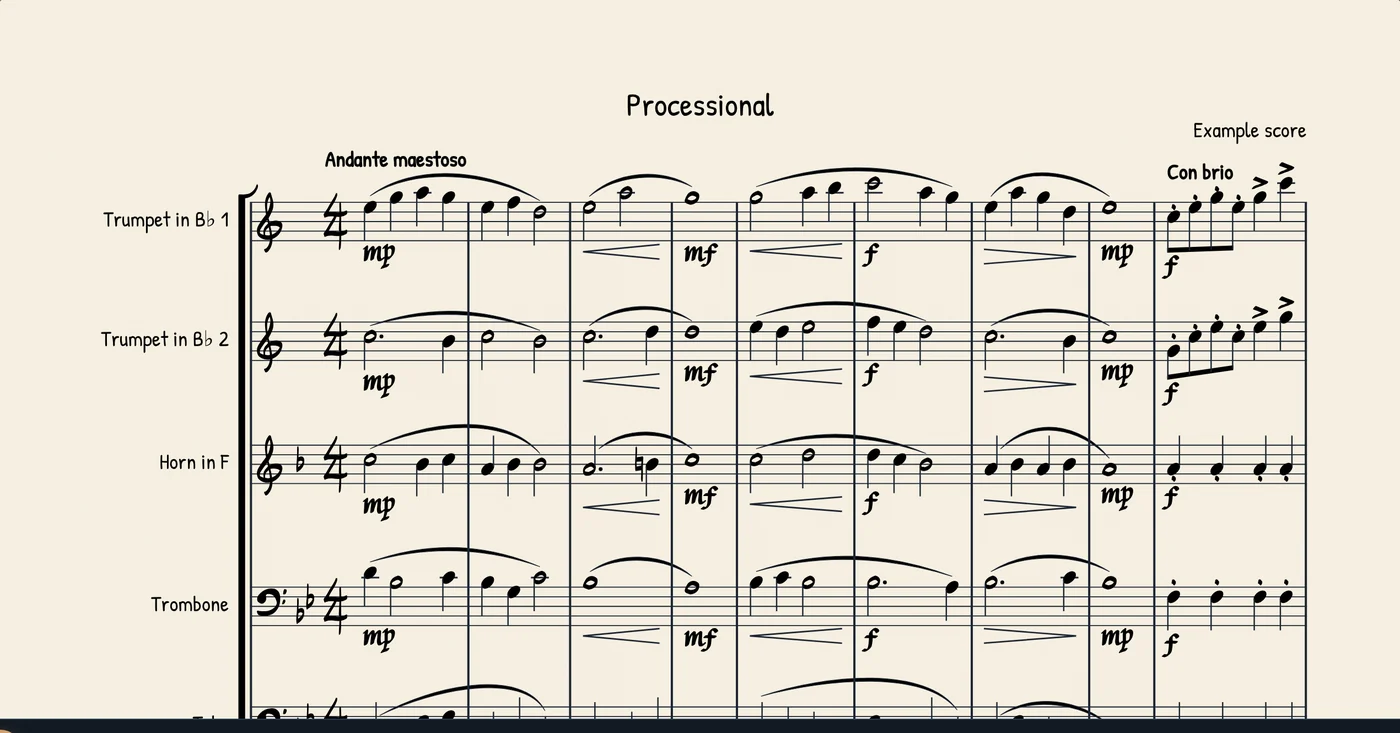
The first page of a brass quintet score as thirdNature engraves it
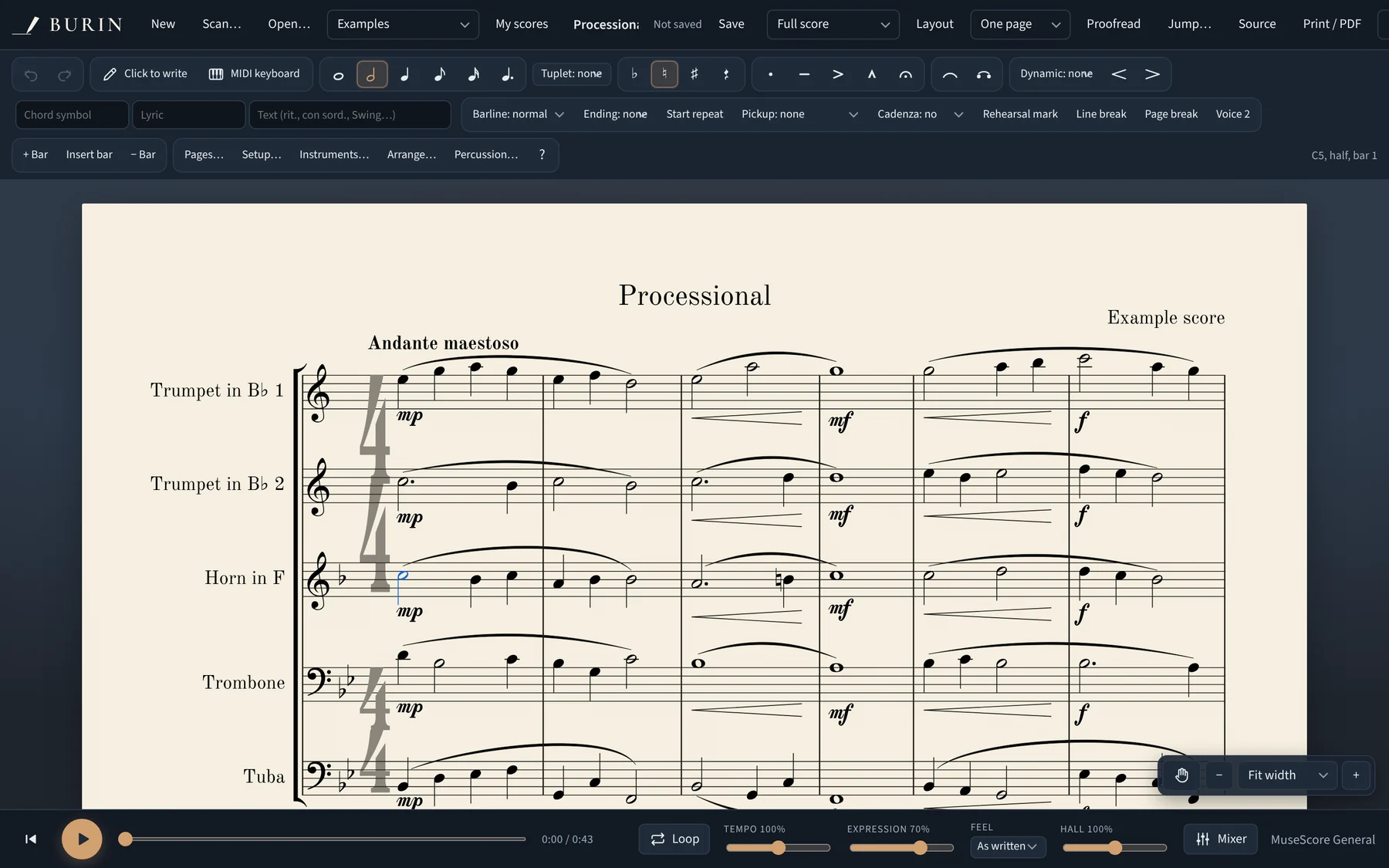
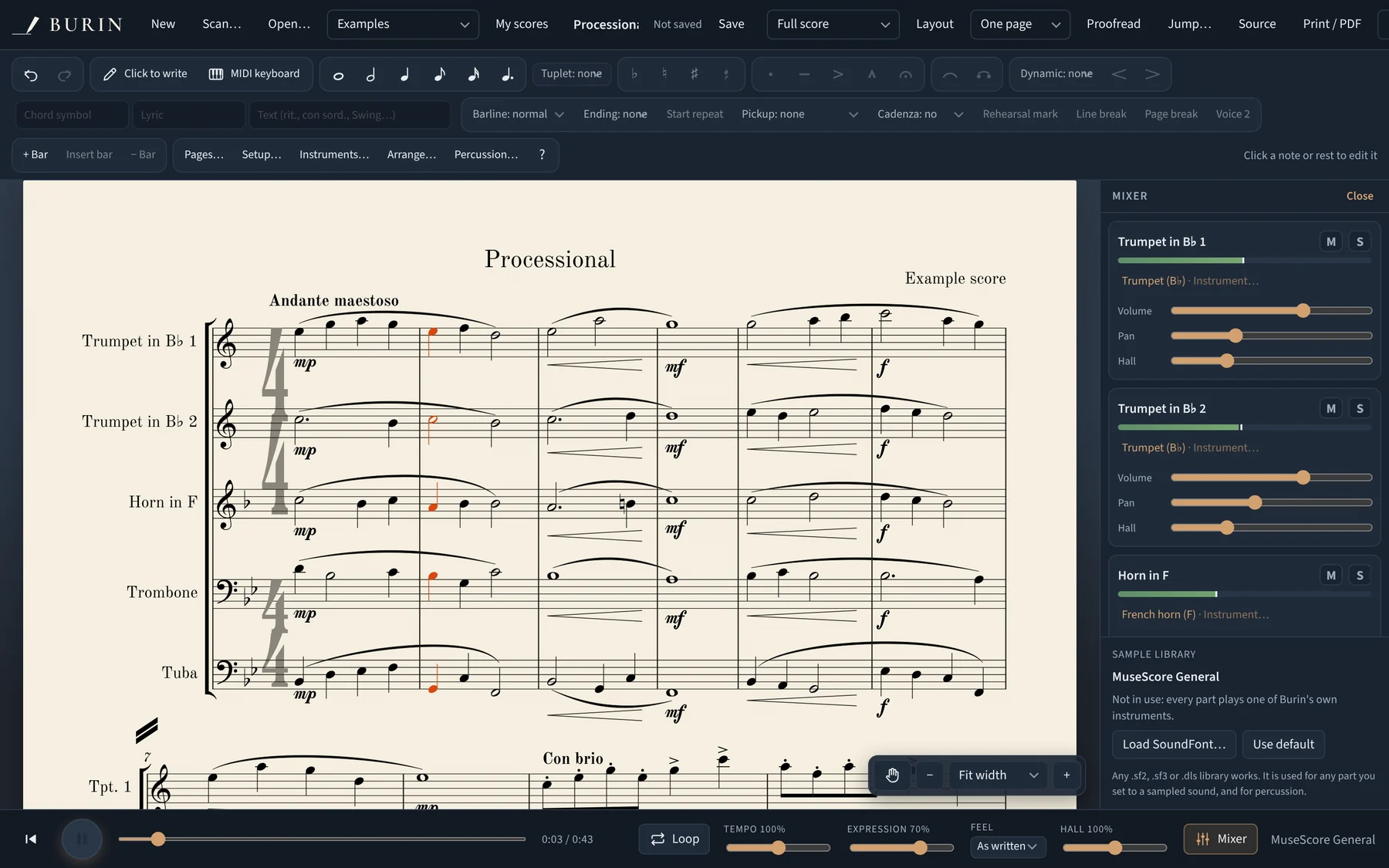
A brass quintet score open in thirdNature, with the editing tools above it and the playback bar below
Opens Finale .musx MusicXML from Sibelius, Dorico and MuseScore MIDI, MEI and ABC PDFs and photos of printed music

The philosophy of third nature

Beyond second nature.

For centuries, philosophers have used the expression second nature to describe the extraordinary human ability to turn learned skills into instinct.

We believe making music can go a step further.

An idea begins in the composer’s imagination. It takes form through a precise written language. And finally, in the hands of a performer, it becomes living sound.

  1. First nature

    The instinct to create

    Music exists in the composer’s imagination.

  2. Second nature

    The mastery of musical language

    Knowledge and practice make expressing music through notation intuitive.

  3. Third nature

    The realization of musical intention

    Composer, written score, and performer become part of one continuous creative process.

Three stages. One musical intention.

Third Nature. From imagination to interpretation.

Plate II · Scan to score

Turn a stack of printed parts into a score you can edit.

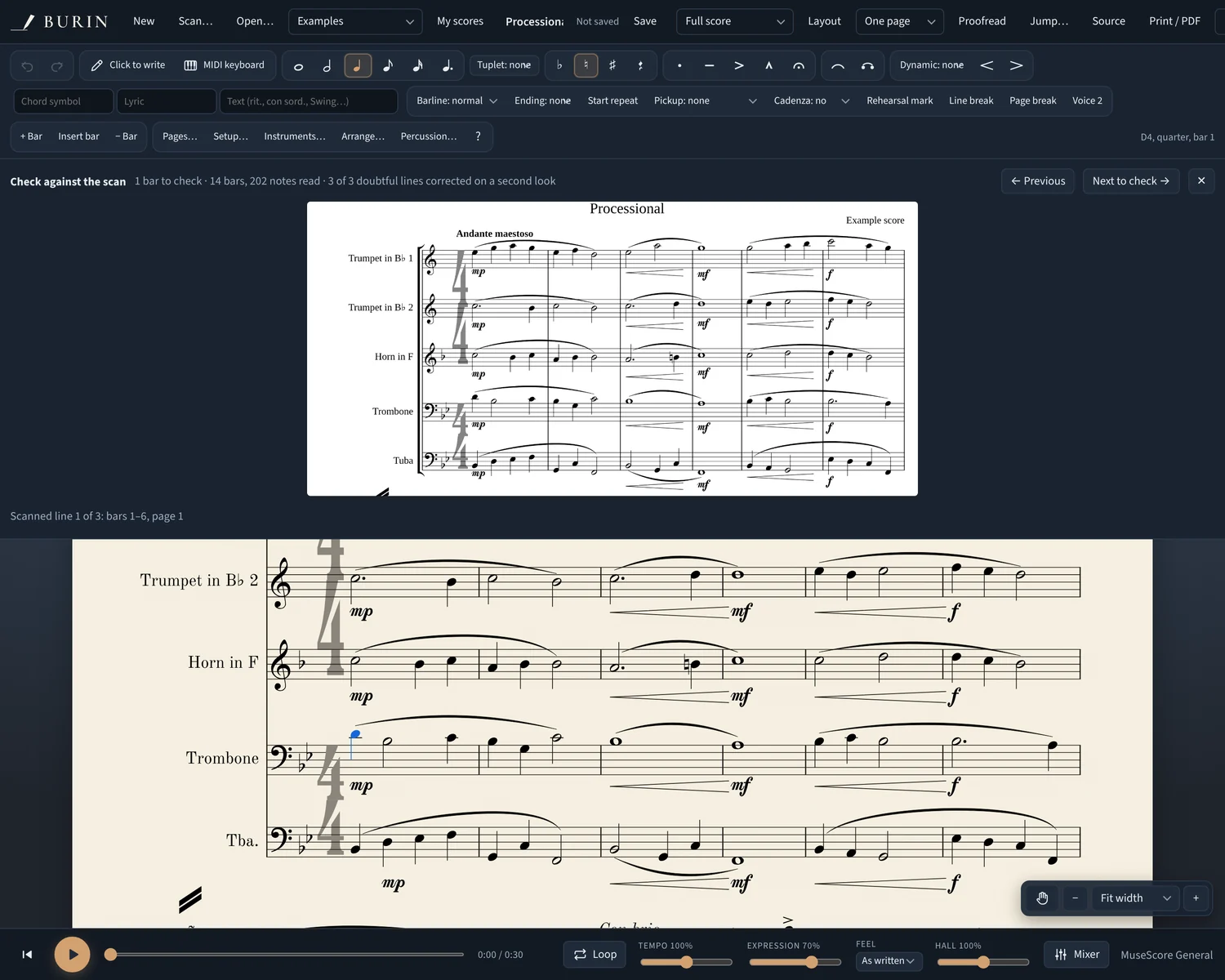
Give thirdNature a PDF, a scan or a photograph. It finds each line of music, reads it, and writes it out as real notation, not a picture.

  • Every bar is added up, and anything doubtful is marked for you to check against the scan, side by side.
  • Scan a whole set of parts and combine them into one full score, lined up by their printed bar numbers.
  • Transpositions come from each part’s name, so a B♭ cornet part sounds as it should.
A scanned line of music shown above the notation thirdNature read from it, for checking
Plate III · Proofreading

Find the questions before the band does.

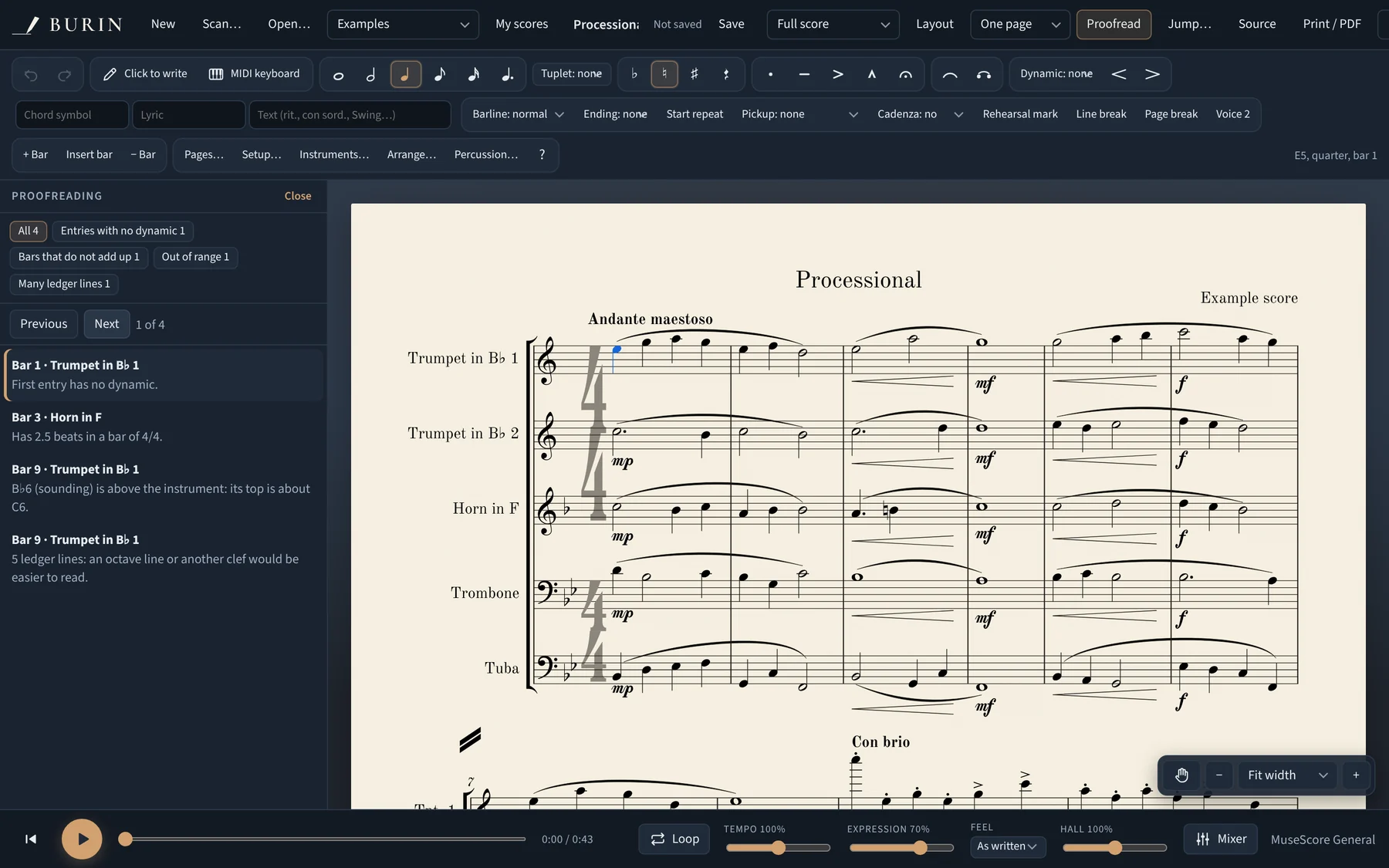
thirdNature reads your score as you write and lists what a player would stop the rehearsal to ask. Click one and it takes you to the note.

  • Bars that do not add up, and notes outside an instrument’s range.
  • Entries after a long rest with no dynamic.
  • Accidentals that sound but are not printed, broken ties, and more.
The proofreading panel listing four queries beside the score
Plate IV · Parts

Parts that make themselves.

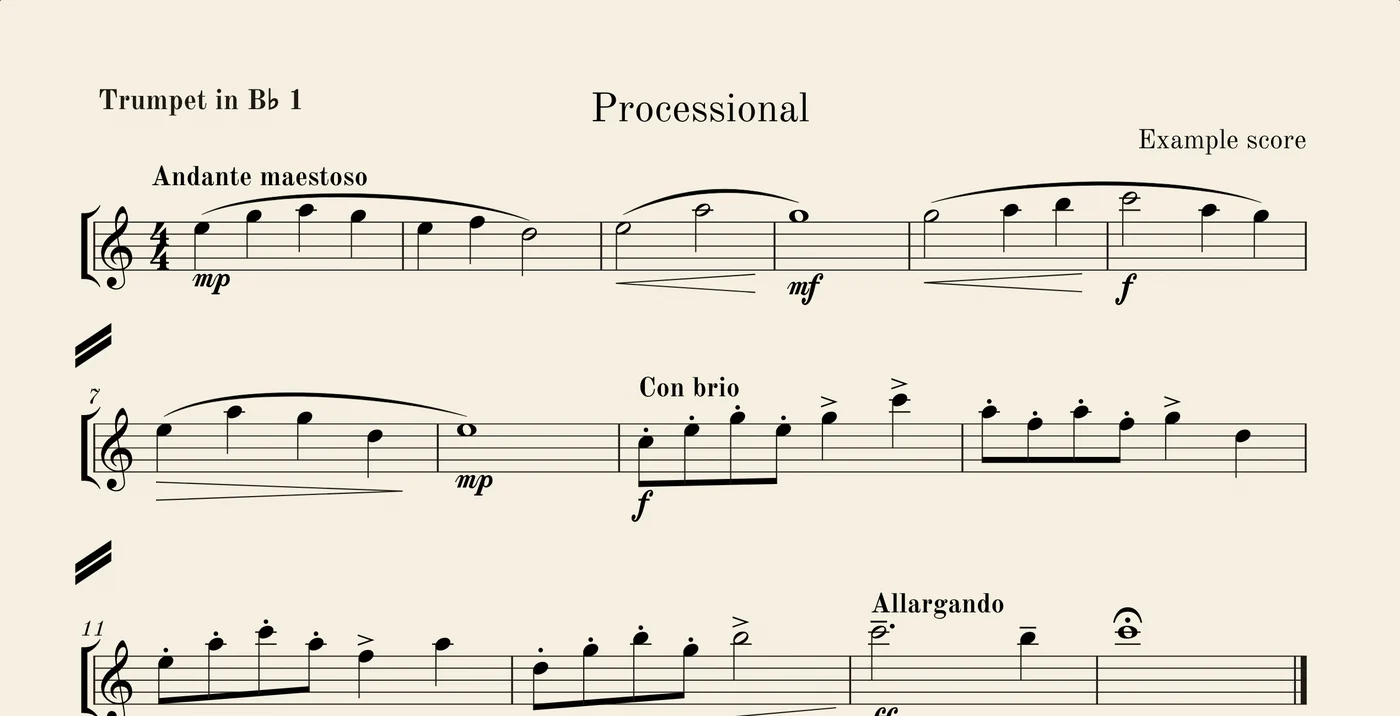
Every instrument’s part is extracted from the score and stays in step with it. Change a note in the score and the part is already right.

  • Multi-bar rests, cues that follow their source, and page turns where you put them.
  • Each part keeps its own size, spacing and page count; fit any of them to a set number of pages.
  • Title pages, headers, footers, copyright lines and a table of contents.
An extracted trumpet part

Engraving styles & playback

Choose how it looks. Hear how it sounds.

Five house styles, from classic and hand-engraved to jazz, change the whole score at a click. Playback phrases like players do, with a mixer for every part, swing, and a loop for any passage.

The same score in the jazz engraving style, with handwritten-looking notation
The jazz style: the same score, drawn as a copyist would by hand.
The mixer open beside the score during playback, with a level meter, volume, pan and hall for each instrument
A mixer for every part: level, pan, sound, mute and solo.

Everything else you need

Built for people who write for real players.

Coming from Finale?

Open your .musx files directly, one at a time or several at once. Your library comes with you.

Percussion that makes sense

Write drum set quickly, put several instruments on one player’s part, and plan who plays what without clashes.

Arranging tools

Generate drum patterns, bass lines, pads and stabs from the harmony, copy a line to another instrument, and name the chords.

Your own AI assistant

Connect Claude, ChatGPT or another assistant to your account. It can read your scores, answer how-do-I questions and make changes for you.

Share and work together

Send a link that plays in any browser, or invite someone to edit. A score you have open updates by itself when they save.

Find anything by typing

Press Ctrl+K and type a word or two to reach any command, or a bar number to go straight there.

Print and export

Print or save a PDF at any paper size. Export MIDI, audio, or the score itself to take elsewhere.

Transposing done right

Brass band, wind band and orchestral transpositions are built in. Flip between written and concert pitch whenever you like.

Your scores stay yours

Scores are stored in an open format (MEI) you can download at any time. No lock-in.


On every device

Your library on the stand, the sofa and the train.

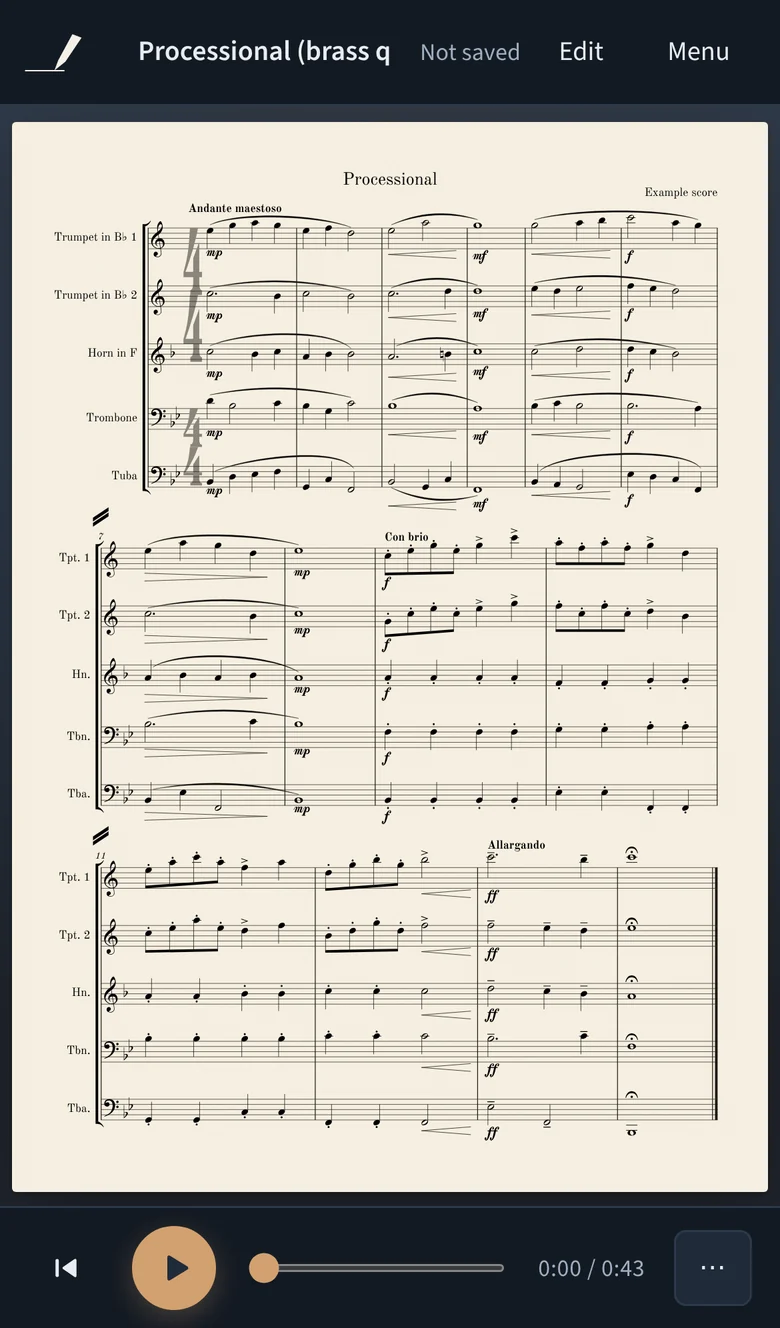
thirdNature runs in the browser on a computer, a tablet or a phone. Sign in and your scores are there. Add it to your home screen and it opens like an app.

A score open in thirdNature on a phone

Pricing

One plan. Everything in it.

Try all of thirdNature free for 14 days. No card needed to start.

Monthly

$12 a month

Pay as you go. Cancel whenever you like.

Start free trial
Two months free

Yearly

$120 a year

The same as $10 a month, paid once a year.

Start free trial

Questions

Asked and answered.

Do I have to install anything?

No. thirdNature runs in a modern browser on Mac, Windows, Linux, Chromebook, iPad and phone. Create your account and you are writing music a minute later.

Can I bring my Finale files?

Yes. Open .musx files directly, or several at once. thirdNature also opens MusicXML (from Sibelius, Dorico, MuseScore and others), MIDI, MEI and ABC. Very old .mus files are best exported from Finale as MusicXML first.

How good is the scanning?

It reads clean printed music well and photocopies reasonably, and it is honest about what it is unsure of: every bar is checked to add up, and doubtful ones are marked for you to compare with the scan. Plan to proofread a scanned score, as you would any transcription. Handwritten music, lyrics and tablature are not read yet.

Is AI included in the price?

Scanning is included. thirdNature does not charge for an AI helper, and does not need one: if you want an assistant to work on your scores, you connect the one you already use, such as Claude or ChatGPT, and it works on your account.

What happens to my scores if I stop paying?

They are yours. You can still open, print and export every score, in an open format, along with PDF, MIDI and audio.

Can I scan any music?

Scan and arrange music you own the rights to, that is out of copyright, or that you have permission to use.

Write the next one in thirdNature.

Fourteen days free, with everything switched on.